


Ispagnac
• Lozère (48320) • Population: 851 • Altitude: 518 m
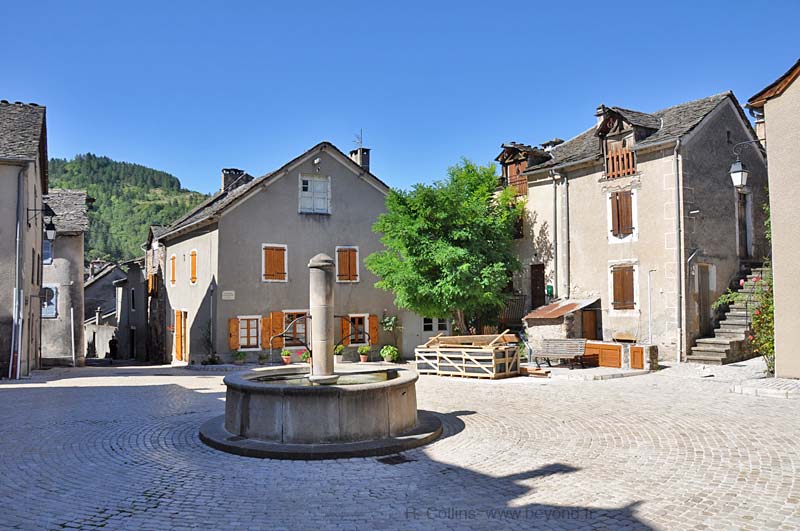
Gallery of 15 photos for Ispagnac

 See map
Ispagnac at the northern end of the Tarn Gorges is a picturesque fortified little town with interesting cultural sites and an active market and activities for summertime visitors.
Ispagnac Church
The church in Ispagnac is 12th century. It's much renovated now, having been heavily damaged during the Wars of Religion.
History of Ispagnac
Name
First record, Hispaniacum, meaning villa of Hispanus, a Roman who came to live in the valley here.
Prehistoric: A tumulus at Le Freycinel, a small hamlet 8 km north of Ispagnac village, contained material from the Bronze-age Hallstatt Culture (History). At this site there's a dolmen, southeast of the junction of the D31 and D35 roads.
Celto-Ligurian: Dolmens and menhirs are located on the Causse Méjean, the high plateau overlooking Ispagnac south of the river.
Gallo-Roman: Many Gallo-Roman artifacts have been discovered here; some are on display at the museum in Mende. A Gallo-Roman funeral stele is being used in the town church.
Medieval: The monastery here, cited in 1142, was connected to the Abbey of Saint-Géraud d'Aurillac. The town church was severely damaged during the Wars of Religion.
Hiking
• GPS: 44.370291, 3.534901
One hiking trail begins in Ispagnac. It goes west along roads through the village of Molines, then climbs the slope to join the GR de Pays Tour du Sauveterre, a hike that loops around the high plateau north of the Tarn river valley between Ispagnac and Sainte Enimie.